Showing posts with label cool tech. Show all posts

Tuesday, October 28, 2014

The Peripheral by William Gibson (Review)


I’ve come to the party late. 30 years late. I first read William Gibson’s groundbreaking and highly influential debut novel, Neuromancer, a few months ago. And I honestly read it out of shame. Since I work in IT and write science fiction, how could I not have read the book that essentially started the cyberpunk movement?

If you have not read anything by Gibson before, should you start with Neuromancer, his first novel, or The Peripheral, his latest (released today, Oct. 28, 2014)? Having just done the opposite, I say start with Peripheral. (And io9.com’s Annalee Newitz agrees with me). 

The Peripheral touches on some of the same themes as the earlier work, and is completely in tune with the current state of the “conversation” in Science Fiction. And for those who have been frustrated with Gibson’s work since the Neuromancer series, this can be seen as his “Return to Science Fiction,” although some will argue he never left.

As in his first novel, Gibson’s latest novel combines high technology (and how it fits into our lives and gets used in unexpected ways) with noir themes, and weaves a distinct linguistic tapestry of a dark future. The vernacular of the characters can be a little baffling at first. Gibson drops you into this new world with minimal explanation. But meanings will become clear from context and with a little reasoning, and the use of language makes you feel like an insider once you grasp it, which really isn’t hard to do.

The tech ideas blew me away in the first few pages. Imagine tattoos, one of the most ubiquitous forms of human modification today, being turned into haptic devices for combat troops, vibrating to tell a soldier when they are under threat, where to run, and where to shoot. Now imagine getting hypovibrochondria (phantom phone vibration) from that tattoo.

We still don’t have the kind of immersive virtual reality he describes, although Oculus Rift VR goggles are expected to finally become available next year (2015), and the company was purchased by Facebook – even Sony has decided to develop VR goggles for gaming, and the Samsung Note is being adapted for Oculus VR as well.

As for the noir aspects of the novel, we soon meet Netherton, a “misanthropic male” for hire (his services are PR instead of PI). When he gets involved with and tries to impress his femme fatale client, he inadvertently gets himself and others dragged into a perplexing conspiracy perpetrated by mysterious forces. Figuring out who those forces are, what they are plotting, and how to stop them is the central intrigue that spans the novel. But Netherton is not the main character of the story, which is probably a good thing because his pessimistic attitude would get overwhelming. However, the information we get from his point-of-view is crucial.

Flynne Fisher, in contrast with Netherton, is extremely sympathetic. Unlike her big brother, Burton (with the glitch haptic tattoo), she sacrificed her chance at a career in the military in order to stay in their home town and care for their ailing mother. Despite the tremendous obstacles in life, she’s undaunted, and struggles to gain her own agency and eke out a (mostly) honest living in a community that has done its best to shelter her from the shadier elements of a world dominated by corrupt politicians, illicit drug manufacturers, and greedy corporations.

When Flynne fills in for her brother, who has been working under the table as a video game beta tester despite his VA disability, she witnesses what seems to be a murder. At first, the game itself seems like it might be a First Person Shooter (like Call of Duty), possibly with a LARPing component. But as the reader, we are still trying to figure out how this world works and what it all means. That journey of discovery is the other major intrigue of the book. Gibson artfully doles out hints and passing comments that help the reader piece the world together.

There are many new themes not seen in Gibson’s debut novel. The notion of an in-game crime reminded me of Charles Stross’s Halting State, but this crime turns out to be far different in nature. I enjoyed Gibson’s take on imperialism, riffing on Cory Doctorow’s concept of Gold Farming (see his new book, In Real Life, or For The Win). The story is permeated by a looming economic dread, with only a thread of hope for the 99% whose livelihoods are often at the whim of the 1%.

There are a few themes that I wish Gibson had dug into more deeply. Flynne and her cohorts live in a rural Southern community that reminds me of my own roots in Eastern Kentucky. As in many rural communities there is a strong gun culture. This is important for the plot to play out, and Gibson represents gun culture respectfully, which I appreciate. However, he totally ignores concerns about gun violence. Less than a week ago there was yet another tragic shooting at Marysville-Pilchuck High School in, WA, where a cousin of mine is a student. Perhaps it would be difficult to address the issue in depth given the needs of the story, but there are so many other aspects of societal change that Gibson addresses skillfully and concisely. The issue deserves some recognition, I think.

Also, I wish Gibson did a better job with race and ethnicity issues. His representation of Asian cultures is particularly stereotypical. Sadly, this is a theme I wish he had not carried over from Neuromancer. As in his first novel, the Chinese are painted as this mysterious entity, an enigmatic source of black-box technology. There is also a terrorist from the Middle East, a cliché character who is paper-thin.

However, the cast of characters is diverse. The primary protagonist is a young woman (Flynne). Most of the important characters in Flynne’s cohort either have a disability, are people of color, or are gay or lesbian. There is even a transgender character. Gibson treats all these characters with respect, as he does with rural people/culture. 

The pace of the novel slows down for a bit in the last third of book to develop the characters and explore the worldbuilding. At the same time the threat of a powerful enemy looms over them, ever closer and more dangerous. Some readers might think the pace slows down too much here, but I enjoyed getting a slight breather before launching us into the climax, which takes conflicts from two settings and deftly resolves them from a single setting. 

Despite the bleakness, I would put this book in the Optimistic SF camp, along with Project Hieroglyph, Neal Stephenson’s latest project. Humanity does abuse and break the world, partially due to technology. However, technology also holds the key to fixing the world, if people will just take that goal seriously. 


http://blog.liminal.it/2014/09/project-hieroglyph-scientifically.html


From the moment I picked up The Peripheral, I found it as much fun to think about as it was to read. It’s top-notch science fiction for readers who are interested in technology. There is a diverse collection of compelling characters and an engaging plot. It echoes some themes from Gibson’s hugely influential first novel, Neuromancer, but this is a very current novel that moves the conversation forward.

LA fans, Gibson will be reading/signing at Skylight books on Saturday Nov. 1 at 5:00 pm (buy book online from them to get ticket to the event). He has other tour appearances in other cities.

Wednesday, January 15, 2014

Writing Productively

I'm starting a series of blog posts on productivity tools for writers. I don't claim to have mastered writing yet, but I've had a great career as a programmer/analyst and IT project manager. I have in fact been called "The Efficiency Expert."

No, not this kind of Efficiency Expert! (See "Knowing the Place of Technology.")


My particular talent is understanding business processes and needs, and being able to find ways for technology to meet those needs. My approach is a combination of my background in Anthropology and application development, informed by my insight into human behavior.

The creative process is not the same for every writer. Some feel that any attempt to structure their process will kill it, and others may obsess over structuring their time and process. Most of us are between those two extremes. If you believe technology can be a tool to help you be more productive and financially successful as a writer, then please check out my series, Writing Productively, and see if there are some ideas you can use.

I'm starting with tutorials of how I use Insightly, a Customer Relationship Management (CRM) system designed for small businesses that includes some project management features. Each week I'll discuss one of the five tabs that I use in the Insightly CRM. I will eventually discuss tools like Scrivener and yWriter, and create some videos, but I can't commit to the timeline on those because they're beyond the next handful of weeks.

I chose to use Insightly after trying several similar systems because I found it both simple to use and flexible enough to meet my needs as a writer. Also, when I made some suggestions for system enhancements, I found them extremely open to suggestions, and their customer service was extremely friendly and helpful - above and beyond what I usually experience with software support. The best software providers I have worked with have always been the ones that are responsive to customer suggestions.

I guess my suggestions got their attention, because they soon asked me if I would be willing to be interviewed by their PR folks to publish a case study on me for their web site. Because of my great experience with them so far, I happily agreed.

Other posts in this series:
  1. Tracking Story Ideas with Insightly Projects
  2. Configuring Insightly Projects 
  3. Insightly Tasks & Life-Cycle of a Story
  4. Configuring Tasks in Insightly
  5. The Tasks Tab 
  6. Organizations Tab

Sunday, November 10, 2013

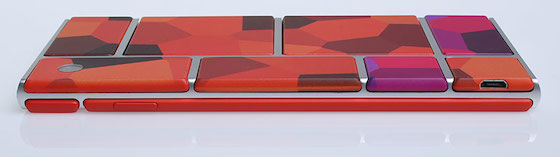
Modular phone

I typically like to customize gadgets, software, etc., so I was excited when I first heard about Phonebloks. Reducing e-waste, that's a great outcome as well.


Then I realized they didn't actually have any way of making the devices, they were just raising awareness and building a community around what they wanted. There was no Kickstarter to build this thing. Some experts said that the technology wasn't even viable yet.

So, I said, what good is this?

Now it turns out Motorola had already secretly come up with an ambitious project to do this very same thing. And they've teamed up with the Phoneblocks guys. How cool is that!

I almost want to say, "See, maybe it is worthwhile to build hype over an idea, even when there isn't a clear path to execution."

But I can't say that. This is just serendipitous. They didn't cause Motorola to do Project Ara. Motorola was already doing it. Maybe they'll bring something helpful to the table, but what if there was no project Ara? Would they have influenced another manufacturer to take this on?

If you've got a good idea and the ability to make a compelling video, there's not much cost to trying to start a movement. You might even get a career out of it somehow. And, maybe there's nothing wrong with that, as long as you're not misleading people.

Tuesday, November 5, 2013

Enders Game Movie Sequel?

Ender's Game took the number one slot at the box office over the weekend, and I watched it with a bunch of 8th graders, only one of whom had read the book. It blew their minds, and they thought it was great. (Spoilers ahead.)


As an adult who has read through to about the middle of book seven in the series (at which point I became too disturbed by his in-book comments about homosexuality to continue reading), I thought the film was very good, but not great. It hit all the major plot points I was expecting and felt true to the original story.

Battle School was the core of the story, and I think that was great. The space combat was greatly truncated compared to the book, but how many space battles can you watch when the key characters are just watching a projection above their heads and remote-controlling the battle above them?

Observation on User Interfaces for Computers: Gestural control was very dramatic when Ender is zooming in and out, changing perspectives of the projected space battles, but I still feel unconvinced that a computer interface with gestures is comfortable/workable for the end user without a lot of haptic feedback. The one-handed typing interface was interesting to watch - Ender was able to hold his tablet with one hand and use some sort of sign-langauge-esque typing technique.
One reason I say it was not great is because I had to explain so much about the ending to my group of moviegoers, not just the 8th graders, but also the other adults. When the movie isn't clear to those who have not read the book, that can be a problem. But it wasn't so confusing that it ruined enjoyment of the story. It's a complex story, and some events at the end were just a little too rushed to fully take in.

Even though the movie took the top slot, some analysts have suggested that it didn't do well enough to warrant a movie sequel. However, that doesn't seem to have stopped a lot of people from speculating about it. In fact, it was one of the first things to be discussed by my group of moviegoers after the lights came up. It's probably too early to know if there will be a sequel. Overseas sales are at least as important, if not more important than US sales these days.

The three likely paths a movie sequel might take are:
  1. Speaker For the Dead - the next book in the series which shows Ender 30 years later. There's not much action, and it's a very different kind of story.
  2. Ender's Shadow - Which is Bean's story, and mostly concurrent with Ender's Game. It might be good to make this while the actors have not aged too much.
  3. Fleet School - first in a new series of YA novels by card that picks up right after Ender's Game to show what happens to the Battle School after the war.
When you look at the fact that the Ender's Game novel has been back on the Best Seller list (mass-market paperbacks) for a year, and has held the #1 slot for the past few weeks, and a handful of other weeks over the summer, it's clear that Card is profiting from the movie indirectly, despite the fact that he does not profit directly from the movie (he got a flat fee for these film rights years ago).

I don't know about the film rights for the other books. It seems likely that Card would not sell the Fleet School rights for a flat fee if he thought he could profit more from the movie sales.

However, this Q&A from 2010 indicates that Ender's Game and Ender's Shadow were almost combined as one film. This suggests to me that the rights for Shadow might be in the same category as Game. However, that's just speculation on my part. It is equally possible that Card was hoping to work in Shadow so that he could sell additional rights that would be tied to the movie's earnings. Again, just my own speculation.

That said, if a sequel is made, I'm most interested in seeing Ender's Shadow. Bean is a great character, and we didn't get to see much of him in Game, even though he's clearly an important player.


Monday, October 28, 2013

One Tablet Per Child in Redlands?

Rwanda's OLPC vs. LAUSD's iPad initiative vs. Redlands USD's Dell Laptop decision.

The One Laptop Per Child (OLPC) policy is the foundation of what Rwandan President Paul Kagame hopes will make Rwanda into a tech hub of Africa. If Rwanda can provide one laptop per child, shouldn't we be able to do that in the US? And if laptops are being replaced by tablets, shouldn't we be able to provide one tablet per child?


Redlands Unified School District board just voted to purchase Dell Laptops, deciding laptops are the best solution for this district. As a member of the Finance Committee at Sacred Heart Academy in Redlands (a private school), I'm taking a sharp look at the OLPC and OTPC (One Tablet Per Child) movements.

First, Rwanda's program is not without criticism. They are struggling to deal with issues of theft and student distraction. OLPC program officials want the devices to go home. However, to prevent theft and to deal with parent complaints that laptops are a distraction at home, some teachers lock up the laptops at school. Still, kids have been caught playing video games like "Doom" during class.

Los Angeles Unified School District entered into a contract with Apple to purchase iPads and special education software for all students and teachers this year. The rollout of this initiative has been plagued with problems.

LAUSD's Problems

Here is a list of some of the problems that have arisen to date in LAUSD:

Is Apple Enterprise-Ready?

Apple famously flopped in the business computing market with the Apple III. There has been a long-standing contempt of the business market at Apple, that started changing in recent years due to their success with iPhones and iPads. However, recent iPad sales have been declining, precipitously. Apple may have reached a point where competitors, like Microsoft & Samsung, take the market from them, just like Android took over the smartphone market that the iPhone created.

Therefore, Apple has never catered to enterprise-wide deployment of their devices and software. And it shows. The iPad security issues in the LAUSD (and even the keyboard issue, I believe) are a symptom of this problem. Schools (including colleges and universities) that have attempted to integrate Apple products into their enterprise network have experienced a number of problems. One of the most discouraging, for me, is the inability to re-issue textbooks to new students each year.

Solutions


Locking down the devices

  • Yes, we should attempt to lock down the devices. However, even more important than preventing kids from browsing the Internet and playing games, we need to do our best to keep the child's information secure. This is information that could be abused to harm a student, potentially from a predator outside the school system, a bully inside the school, or a malicious school employee.
  • Signed Agreement - have the parent (for legal reasons) & student (for psychological reasons) sign an agreement regarding the use of technology. The parent should understand that they are responsible for how their child uses a device and they should understand what they need to do to keep their child safe and productive. In corporate environments, signing an agreement about how technology can be used is common.
  • Devices can be physically locked down, stored in a cart where they can charge overnight, and kept securely in the classroom. (At least as securely as anything else in the classroom - there will be break-ins).
  • Reward the hackers, don't punish them. If a student is clever enough to hack the device, and they report the vulnerability to the district (and don't publicize the exploit), they should be rewarded. The reward should be attractive, especially as the system becomes harder to crack. We should expect a student to hack the system, to gain access to teacher or administrator passwords. The trick is how we deal with that.
(There is a good fictional example of a High School student hacking a laptop, and of student information being abused by malicious school employees, in Cory Doctorow's novel, Little Brother).

Cloud Computing

Cloud computing has security concerns. They are concerns the industry is dealing with every day, but the biggest security concern is always the person who is accessing the system. Putting responsibility on the student to use a complex password, to remember it and keep private, may not be workable. Biometric security is not advanced enough to be secure (as I discussed in an earlier post on the iPhone 5S). So, the cloud should be used carefully.

Working with web/based apps and storing class projects in a Cloud that is accessible from home could be great. However, sensitive information about that child needs to be kept secure. Essay's may reveal private information about a student. Requiring tertiary authentication might be a requirement (like a home banking system where you are presented with a picture, etc.). So, the parts of the cloud accessible from home may need to be limited compared to what's accessible from the classroom.

Look to Windows Laptops & Tablet/Laptop Hybrids (coming soon)

  • Laptops have keyboards (critical for compliance with Common Core curriculum and testing), and there are a number of good manufacturers of Windows laptops. They also have USB ports.
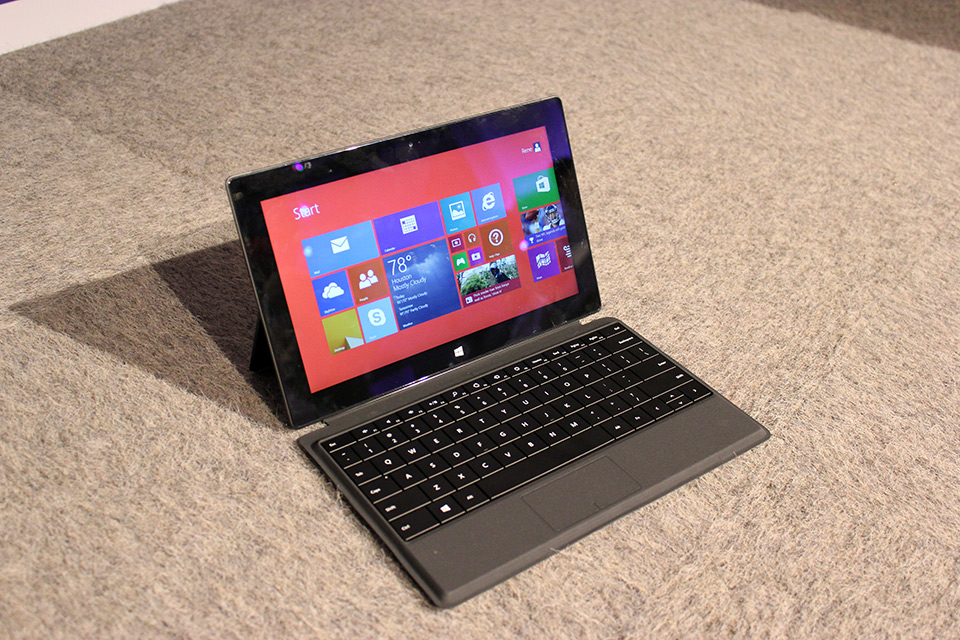
  • Tablet/Laptop Hybrids, like the Surface Pro 2 and Samsung Ativ tablets, either come with or integrate well with keyboards and run Windows. The Tablets sometimes run a special version of Windows 8, and TrueCrypt does not yet support any version of Windows 8, but these Tablet/Laptop Hybrids bear close watching over the next couple years.
  • Microsoft has long dominated the Enterprise Software market, and they have great tools for centrally managing all the laptops. This includes tools to quickly set up new hardware (i.e., "imaging" a new laptop to install all the software automatically), and tools to centrally install new software for existing laptops on the network, and to centrally push out software updates, such as security updates. Even a laptop that is turned off can be automatically awakened to apply such updates.

Work out the E-Book licensing issue

One of my biggest reasons for wanting tablets is to eliminate those heavy, bulky, and often outdated textbooks. I've been concerned for years about the health impact of carrying heavy textbooks. However, there needs to be a good solution to the licensing issue. If books need to be reissued to students every year, buying a whole new license for every student is just too costly.

Poverty

Technology is not a solution to biggest problems facing education today, because it doesn't directly address the problem. The problem is Poverty. This is from an NPR interview with Diane Ravitch, a former assistant secretary of education:
Where there are low test scores, where there are higher dropout rates than the national average, is where there is concentrated poverty. Now, we cannot, obviously, wipe poverty out overnight, but there are many things we can do to make school a stronger equalizer than it is today. One of those would be to have reduced class sizes in the schools that serve the children of poverty. Another would be to have universal pre-kindergarten. We should have a strong arts program in every one of these schools, because children have to have a reason to come to school other than just to be tested.
Poverty is definitely an issue in the LAUSD, as it is in the high-profile Philidephia School District. Putting technology in schools is something I believe in, but there are some very basic funding issues in schools that I think we need to deal with first, and laptops will not reduce the need for more teachers and more staff in these poverty-stricken districts. Laptops can be part of a solution, but it's not going to miraculously revolutionize public school education without spending money on a lot of other areas. This is likely also true, if not more true, in Rwanda.

Monday, September 23, 2013

Surface Pro 2 Unveiled

I'm just about ready to take the leap on a laptop replacement - but the Surface Pro 2 is not available quite yet. Snap a keyboard on, grab my lap desk, and I'll be ready to go.

This is one of the products I mentioned to Information Week last month.

Tuesday, August 20, 2013

Cool Tech for Back-To-School

I was quoted in Information Week article on tech tools for college students going back to school. Items 4 (Tablet/Laptop Hybrids) and 5 (LinkedIn University Pages) are where I was quoted. I also suggested item 6 (Portable Power - rechargeable batteries with adapters to recharge your portable devices).
UA-1916217-16