Showing posts with label technology changing society. Show all posts

Tuesday, October 28, 2014

The Peripheral by William Gibson (Review)


I’ve come to the party late. 30 years late. I first read William Gibson’s groundbreaking and highly influential debut novel, Neuromancer, a few months ago. And I honestly read it out of shame. Since I work in IT and write science fiction, how could I not have read the book that essentially started the cyberpunk movement?

If you have not read anything by Gibson before, should you start with Neuromancer, his first novel, or The Peripheral, his latest (released today, Oct. 28, 2014)? Having just done the opposite, I say start with Peripheral. (And io9.com’s Annalee Newitz agrees with me). 

The Peripheral touches on some of the same themes as the earlier work, and is completely in tune with the current state of the “conversation” in Science Fiction. And for those who have been frustrated with Gibson’s work since the Neuromancer series, this can be seen as his “Return to Science Fiction,” although some will argue he never left.

As in his first novel, Gibson’s latest novel combines high technology (and how it fits into our lives and gets used in unexpected ways) with noir themes, and weaves a distinct linguistic tapestry of a dark future. The vernacular of the characters can be a little baffling at first. Gibson drops you into this new world with minimal explanation. But meanings will become clear from context and with a little reasoning, and the use of language makes you feel like an insider once you grasp it, which really isn’t hard to do.

The tech ideas blew me away in the first few pages. Imagine tattoos, one of the most ubiquitous forms of human modification today, being turned into haptic devices for combat troops, vibrating to tell a soldier when they are under threat, where to run, and where to shoot. Now imagine getting hypovibrochondria (phantom phone vibration) from that tattoo.

We still don’t have the kind of immersive virtual reality he describes, although Oculus Rift VR goggles are expected to finally become available next year (2015), and the company was purchased by Facebook – even Sony has decided to develop VR goggles for gaming, and the Samsung Note is being adapted for Oculus VR as well.

As for the noir aspects of the novel, we soon meet Netherton, a “misanthropic male” for hire (his services are PR instead of PI). When he gets involved with and tries to impress his femme fatale client, he inadvertently gets himself and others dragged into a perplexing conspiracy perpetrated by mysterious forces. Figuring out who those forces are, what they are plotting, and how to stop them is the central intrigue that spans the novel. But Netherton is not the main character of the story, which is probably a good thing because his pessimistic attitude would get overwhelming. However, the information we get from his point-of-view is crucial.

Flynne Fisher, in contrast with Netherton, is extremely sympathetic. Unlike her big brother, Burton (with the glitch haptic tattoo), she sacrificed her chance at a career in the military in order to stay in their home town and care for their ailing mother. Despite the tremendous obstacles in life, she’s undaunted, and struggles to gain her own agency and eke out a (mostly) honest living in a community that has done its best to shelter her from the shadier elements of a world dominated by corrupt politicians, illicit drug manufacturers, and greedy corporations.

When Flynne fills in for her brother, who has been working under the table as a video game beta tester despite his VA disability, she witnesses what seems to be a murder. At first, the game itself seems like it might be a First Person Shooter (like Call of Duty), possibly with a LARPing component. But as the reader, we are still trying to figure out how this world works and what it all means. That journey of discovery is the other major intrigue of the book. Gibson artfully doles out hints and passing comments that help the reader piece the world together.

There are many new themes not seen in Gibson’s debut novel. The notion of an in-game crime reminded me of Charles Stross’s Halting State, but this crime turns out to be far different in nature. I enjoyed Gibson’s take on imperialism, riffing on Cory Doctorow’s concept of Gold Farming (see his new book, In Real Life, or For The Win). The story is permeated by a looming economic dread, with only a thread of hope for the 99% whose livelihoods are often at the whim of the 1%.

There are a few themes that I wish Gibson had dug into more deeply. Flynne and her cohorts live in a rural Southern community that reminds me of my own roots in Eastern Kentucky. As in many rural communities there is a strong gun culture. This is important for the plot to play out, and Gibson represents gun culture respectfully, which I appreciate. However, he totally ignores concerns about gun violence. Less than a week ago there was yet another tragic shooting at Marysville-Pilchuck High School in, WA, where a cousin of mine is a student. Perhaps it would be difficult to address the issue in depth given the needs of the story, but there are so many other aspects of societal change that Gibson addresses skillfully and concisely. The issue deserves some recognition, I think.

Also, I wish Gibson did a better job with race and ethnicity issues. His representation of Asian cultures is particularly stereotypical. Sadly, this is a theme I wish he had not carried over from Neuromancer. As in his first novel, the Chinese are painted as this mysterious entity, an enigmatic source of black-box technology. There is also a terrorist from the Middle East, a cliché character who is paper-thin.

However, the cast of characters is diverse. The primary protagonist is a young woman (Flynne). Most of the important characters in Flynne’s cohort either have a disability, are people of color, or are gay or lesbian. There is even a transgender character. Gibson treats all these characters with respect, as he does with rural people/culture. 

The pace of the novel slows down for a bit in the last third of book to develop the characters and explore the worldbuilding. At the same time the threat of a powerful enemy looms over them, ever closer and more dangerous. Some readers might think the pace slows down too much here, but I enjoyed getting a slight breather before launching us into the climax, which takes conflicts from two settings and deftly resolves them from a single setting. 

Despite the bleakness, I would put this book in the Optimistic SF camp, along with Project Hieroglyph, Neal Stephenson’s latest project. Humanity does abuse and break the world, partially due to technology. However, technology also holds the key to fixing the world, if people will just take that goal seriously. 


http://blog.liminal.it/2014/09/project-hieroglyph-scientifically.html


From the moment I picked up The Peripheral, I found it as much fun to think about as it was to read. It’s top-notch science fiction for readers who are interested in technology. There is a diverse collection of compelling characters and an engaging plot. It echoes some themes from Gibson’s hugely influential first novel, Neuromancer, but this is a very current novel that moves the conversation forward.

LA fans, Gibson will be reading/signing at Skylight books on Saturday Nov. 1 at 5:00 pm (buy book online from them to get ticket to the event). He has other tour appearances in other cities.

Tuesday, September 23, 2014

Project Hieroglyph: Scientifically Responsible Fiction


"The reason that I think that the Hieroglyph project... won't work is because of the 'should' element."
- Jonathan Strahan, 09/13/2014, episode #201 Coode Street Podcast. 

Gary Wolf and Jonothan Strahan debated each other (and themselves, as they so charmingly are wont to do), for nearly 20 minutes about the new anthology, Hieroglyph: Stories and Visions for a Better Future (about 39 minutes into ep. #201). The aspect of Project Hieroglyph that they object to is the notion that Science Fiction - meaning the genre as a whole - should have a purpose. But is that what this anthology is really about?


I attended the Los Angeles book launch of the anthology last week. To be honest, I did get the impression that Lawrence M. Krauss and some other scientists present at the event, really do feel that science fiction should have a function. I think it's clear that Neal Stephenson thinks it is a good thing for at least some science fiction to have a function, and is proud that some of his work has both inspired scientists and engineers. Perhaps the stronger sentiment, though, was that Science Fiction should be more optimistic.


The notion that science fiction can provide a vocabulary of ideas for engineers within large institutions to use as short-hand when working together on projects is one that I find appealing. For much of my IT career I have often been reminded of concepts from science fiction and been a little frustrated that most of my colleagues are unfamiliar with these concepts. But perhaps they have helped me to be a better programmer, analyst, and project manager because I have these concepts in my own head.

Even if those involved with Project Hieroglyph are making a value judgment on science fiction based on its function, I can't bring myself to get too excited about that. It's the nature of art. There will always be differing opinions, and I think that is fine. I like the idea of science fiction sometimes serving such a purpose, and it does reflect on the value of the genre as a whole, but I don't think it all needs to. And this is ultimately what Strahan and Wolf seem to agree on toward the end of their podcast.


In addition to being scientifically responsible (reflecting good science, and ideas that are useful to science and related fields), Stephenson and Krauss said several times during the talk that it was essential to have a good story. So, it's not just about the science, not just about the ideas. Stephenson talked about moving away from a certain period in the genre's past where character and plot were unimportant.  Readers will have to judge if Hieroglyph is successful in this.

I simply look at the book as a themed anthology. I hope it is successful, and I hope there will be more. At the end of the talk, I got to ask a question of the panel. What new opportunities for writers might come out of this project?

That proved a tough question to answer. I thank Stephenson for taking my question seriously. He acknowledge the issue of compensating writers for their art, and said that could be an hour-long discussion all by itself.

I was hoping, though, that he might provide more details about future anthologies, or even novels, sponsored by Project Hieroglyph. Perhaps this project, along with the MIT's 12 Tomorrows anthologies, will emerge as a new trend in publishing. Could it contribute to a resurgence in short fiction? That would be an important development for the future viability of a full-time career for writers.

On that front, Strahan also reports in the podcast, Kathryn Cramer, one of the editors of the Hieroglyph anthology, has tweeted that there will be more projects to come.

I also contacted some of the faculty in University of California Riverside's Science Fiction and Technoculture Studies program. All three Professors of the department were present at the Hieroglyph talk: Rob Latham, Sherryl Vint, and award winning author, Nalo Hopkinson. In an email conversation after the event, I asked Dr. Vint if there might be a UCR sponsored anthology, or maybe a series of on-campus talks with the writers. She did say she was talking with Arizona State University, who partnered with Stephenson to make this anthology happen, but it is unclear if anything will come of that:
"Ed Finn [Director of ASU's Center for Science and the Imagination] and I have begun a dialogue to explore opportunities to collaborate in the future. We have yet to work out any details." 
- Sherryl Vint, Professor of Science Fiction Media Studies, UC Riverside
This is shaping up to be a momentous year for science fiction at UCR. There are lots of exciting possibilities, and also some challenges. They received a prestigious $175,000 Sawyer Seminar grant from the Andrew W. Mellon Foundation, which will include public talks on "ethnic futurisms." The Eaton Collection (world's largest collection of SF/F that's publicly accessible) received a $3.5 million gift.

But prior to that gift, concerns emerged about the Eaton Collection being threatened. Then it appeared that Dr. Steve Cullenberg, Dean of the college that houses the SFTS program, would try to facilitate a dialogue and help address the faculty's concerns about the collection. However, Dean Cullenberg later announce he was stepping down from his position. After the event in LA, I emailed Dr. Latham and asked about where things stand with the Eaton Collection, but he said there would not be much to report until later this fall.

“We hope to have more clarity soon after the Fall term begins. A new college-level committee will be in place then to address some of the faculty’s concerns, and the Senate-wide Library Committee will also be addressing the issue.”
- Rob Latham, Professor of English, UC Riverside
In 2009 Annalee Newitz called UCR a "haven for science fiction studies." I hope this reputation continues. (If you would like to support the SFTS program it UCR, you can donate here.)

As a UCR alumnus and current member of the staff, I would be proud and excited to see UCR participating in Project Hieroglyph. That would be a sign that the project is successful. And the turnout at the talk in LA is another. Reservations for the event filled up before some of my friends could sign up, and the auditorium was packed, people watching from the lounge TV outside. And as soon as I arrived, I purchased the very last copy of the anthology that the bookseller, Skylight Books, brought to the event. They continued to take mail orders and hand out book plates for signing for the rest of the night.


Disclaimer: The ideas and opinions expressed in this personal blog are my own unless otherwise explicitly attributed, and not the official opinion of my employer.

Friday, January 3, 2014

Knowing the Place of Technology

2013 was a bad year for technology and Massively Open Online Courses (MOOCs) are just one more example. Not only was there a backlash among faculty (which I heard echoed on the UCR campus), but there were big failures like San Jose State. They don't seem to be working out well, except for students who are already highly self-motivated. They also don't seem to be more cost-effective.


Part of the problem may be that we're still figuring out how to do a good job of educating people. This is hard to do. It's even harder today because society and technology are changing so fast. We're educating a greater portion of the population, which is good, but this is also revealing the ways that education falls short and fails to serve segments of our society.

Another part of the problem is that we're still figuring out how to make technology that's easy to use. When an application developer or an engineer designs a machine or program to automate a job, a good machine or program is intuitive to use for a person who already has a conceptual understanding of the job that they are doing.

However, learning is far more free-form than other tasks we can automate. Also, overcoming the barriers to learning usually involve activities that machines don't do well - i.e., empathy and creative problem solving. We can find ways to use technology well in education, but technologists need to understand the big picture.

Programmers and engineers sometimes overstate the scope of what technology is capable, partly because they tend not to look beyond that scope. It's important to understand what machines are good at (repetitive tasks, following logical sequences reliably) and how that fits with what people are good at (empathy and creativity).

A good example of this is UserVoice CEO Richard White's recent statements about the BART worker's strike this week, and his interview on Marketplace. He said first the BART employees should be given what they want, and then their jobs should all be automated.

However, as you can hear in the interview, there are aspects of these jobs that White is overlooking. Also, the idea that the BART worker in the interview would be freed to follow her dream career after she gets laid off is pie-in-the-sky idealism. The alternative jobs she lists don't have benefits, and provide unstable income.

White might think that these are the kinds of problems that technologists can't solve on their own. However, these are exactly the kind of problems technologists should be tackling. We should be looking at how technology can be used by the worker to alleviate tedious tasks that machines do well and that people do poorly.

How can technology be used to make the worker more satisfied by their work? By making the worker happier, the technologist makes the worker more productive.

Sunday, December 29, 2013

Google+ Stalker App

I'm conflicted by Google. I've been a fan for a long time. I use a lot of Google services (e.g., this is a Google Blogger site). However, there are privacy concerns because they track your search and browsing habits, and scan the content of messages in Gmail.


The benefits of Google's services are considerable. The only other company that offers a comparable level of integration between apps and business-friendly (enterprise-friendly) services is Microsoft.

And it's growing increasingly clear that Google+ is the cornerstone of how we will access all their services. YouTube comments are now done through Google+, and Google+ comments show up in search results. However, this strategy will fail unless they can prove themselves worthy of our trust.

There's an efficiency to making Google+ the central user profile for all Google services. I see it like using Active Directory on an enterprise network to manage all users in the organization. When you log into your computer at work, you may not realize this Microsoft product is being used to manage your user rights on the corporate network, but it's a powerful tool for managing access to computers, network drives, etc. Your Active Directory account may be used to manage your access to areas of your corporate Intranet, especially if the Intranet was created with Microsoft SharePoint. And it's also tied into your corporate email and calendar, Microsoft's Exchange server, which you access using Outlook.

When you're at work, you have a persona, a way of behaving, a role that you play as an employee. At work, you probably shouldn't go on a political rant, disparaging anyone who opposes your political views as stupid. That kind of behavior can be disruptive to a productive workplace, so you should save that behavior for outside of work.

Likewise, anything you don't want your employer to know, you should not send through corporate email. Some IT departments track the websites you visit, often even blocking access to sites they believe are inappropriate for employees to access. I've had coworker who got fired for watching porn at work. Well, that, and racking up a huge 900-number bill on his company cell phone.

My creepy Big Brother moment with Google came this week. My wife showed me an email she got from Google+. It included a montage of videos and photos that have been automatically uploading to her Google+ account from her Android phone. It's like a scene from a crime show when the detective stumbles on the stalker/murderer's secret wall-collage showing photos of the victim. Please rate the Google+ Stalker App in the Play Store. Yay!


So, Google+ is primarily for information you want to share with the world. Sure, you can set who you want to share your comments with, but it's not hard to accidently share with the wrong circles or with everyone. It's just as easy to make this mistake in Facebook. A friend of mine recently set FB to share posts only with himself for a week. I've made that mistake before, too.

To avoid accidently posting to the wrong audience, I use FB for content I want to share with friends and family, so I don't have to change the settings, which might cause accidental over-sharing. Google+, which is designed for plugging into other services that I want to use

Google may find it's subject to the Microsoft curse. By excelling at serving its business clients, Microsoft has lost a lot of consumer market share, where Apple and Google have become more dominant. Microsoft's Xbox is probably the most notable exception, but it does not integrate with Microsoft's enterprise products.

To avoid the curse, Google has to figure out how to do what most people do every day, intuitively change rolls based on context. They also need to become a bastion of personal privacy, and they've taken some serious hits on this. Their latest Google+ email campaign is not helping.

Monday, December 16, 2013

Performance Writers

Scalzi's new Audible interview discusses history of publishing SF.

John Scalzi weighs in on what it takes to be a successful writer in today's electronic marketplace, and discusses his own unusual path. He talks about what he calls "Performance Skills." While these skills are not new, he says writers have leveraged them in the past, these skills they are more important for success in today's environment.

Scalzi also gives an interesting discussion of how distribution models (i.e., racks in the grocery stores and the rise of specialty book stores) coincided with Science Fiction's New Wave movement, to create the genre that we have today.


Related:

Charles Stross io9 Q & A:
http://blog.liminal.it/2013/12/charles-stross-io9-q.html
Robert J. Sawyer interview:
http://blog.liminal.it/2013/12/paying-piper-or-writer.html


Tuesday, December 10, 2013

Charles Stross io9 Q&A

Stross offered observations on future of publishing.
In a brief Q&A session on io9.com today, Charles Stross was kind enough to answer my question on the future of publishing.


I asked him if he agreed with Robert J. Sawyer's recent interview (See related post from yesterday). In short, "Yes." But he did go on to say there is hope.

A few quotes:
... the publishing world today is almost unrecognizable from how it was 5 years ago.
The key thing to remember is that, however much you may be devoted to it as an art form, writing is a business.
[Yes, I see consolidation of large publishers/agencies...]; also a flourishing of small presses, agencies turning into e-publishers (a multi-agent literary agency has most of the folks an e-publisher needs).

Robert J. Sawyer interview:
http://blog.liminal.it/2013/12/paying-piper-or-writer.html

Monday, December 9, 2013

Paying the Piper (or Writer)

Sawyer is not optimistic about the viability of writing as a full-time career for future generations. As long as there is sufficient demand, I am hopeful, but the lack of a clear path makes this a difficult and confusing time for a new writer.


Self-publishing has not fully emerged as viable alternative, though there are more and more writers developing viable strategies, including a hybrid of traditional and self-publishing (e.g., Michael J. Sullivan). However, it still requires a lot of non-writing work be done by the writer.

This Harvard Business Review  blogger points out that the media industry is not doing badly. It's changing, and people are reading more than ever.

But she also points out that advertisers are not paying as much for online marketing, even though that's where the eyeballs are shifting. The advertising dollars have not shifted to print proportionally. This reflects the issues for e-books. Traditional publishers operate on thin margins, and less money is flowing to the writer.

LinkedIn, for example, is making great use of their Influencers program, getting CEO's and others to write content for free. And there are a lot of people who are willing to write for free in order to promote something else.

But the nature and quality of that writing is very different from a novel or a well-researched non-fiction book. The hours, days, weeks and years it takes to create these written works is far greater.

The crowdfunding model holds some promise. But, can it work for new writers?  A successful writer or editor (e.g., Ellen Datlow's Kickstarter Horror Anthology) is less questionable, but we have yet to see how well the book sells beyond it's original funding.

I wonder what we'll see next?
  • Could a successful author make enough from a Kickstarter to give the finished product away for free? 
  • Will an advertising model emerge, perhaps via the controversial Google Books?
  • Should traditional publishers or agents try to run Kickstarter projects for new writers? 
  • How about high profile workshops like Clarion / Clarion West, or a contests like Writers of the Future?

Friday, November 29, 2013

Why SF Turned Dark & Engineering Wimped Out

Neal Stephenson, thought provoking as always, speaks at the Association for Science and Technology Centers. Here are my main takeaways:


Why has science fiction shifted from optimistic, idealistic stories from 50 years ago, to dark, dystopian stories that dominate the genre today? The shift seems to have occurred in the late 70's with Star Wars (still idealistic, but a gritty and broken-down futuristic world) and Alien (an industrialized, militaristic world). But I think this reflects the cultural change of the 60's. In the 50's there was a stronger emphasis on ideal norms. The cultural revolution of the 60's exposed a lot of the pretense.

The pretense didn't go away, but a layer of pretense was lifted away, and contemporary society is a little more honest about the real norms. In fact, we've become quite jaded, especially when you look at politics. Part of this might also be blamed on Watergate and cameras bringing the horrors of the Vietnam war into the public awareness.

But, Stephenson points out, the "built" environment has only changed superficially since the 70's, compared to the changes between 1900 & 1970's.

The helpfulness of SF to engineering comes from the shared understanding that the engineering team has through the SF that they all have read. This saves time and resources in communicating the vision, because the SF writer has already shared the vision, or some portion of it, some version of it, and the engineers are all on the same page.

The Hieroglyph anthology was designed to use near-future technology to write about tech that might be attainable within the lifetime of an engineering student today.

Why isn't society taking on big projects in the physical world like we used to? Stephenson believes the financial world is what is holding us back, and a modern aversion to risk and trying new things, and our leaders.

I'm not sure I buy this aversion to risk theory. American society, in particular, has become much more dependent, and accepting of, debt as a way of life. There is a vocal movement opposing public debt, but the common use of debt is far greater today than it was prior to the late 70's (when American Express and others started offering charge cards and credit cards).

I think the lack of big engineering projects has more to do with the partisanship of contemporary politics. Stephenson does say he thinks that it has to do with leadership today, and perhaps this is what he's referring to. Taking a political stance on a major engineering project can be politically risky, and the finances of the project can be used to illustrate that risk. However, George W. Bush tried to push for a mission to Mars, with a Moon Station as an interim step. However, this didn't really catch on. Again, this may boil down to partisanship, and also to Americans' suspicion of government, which grew out of the 60's cultural changes, the Vietnam War, and Watergate.

Monday, October 14, 2013

Credit Approved (Flash Fiction)

When I worked for Arrowhead Credit Union, we used a supplemental credit score in addition to the FICO Score as part of our loan underwriting (approval/denial) process for consumer loans. One of my projects was to provide data to Fair Isaac (a.k.a., FICO) so they could create a new custom score based on our own data. 


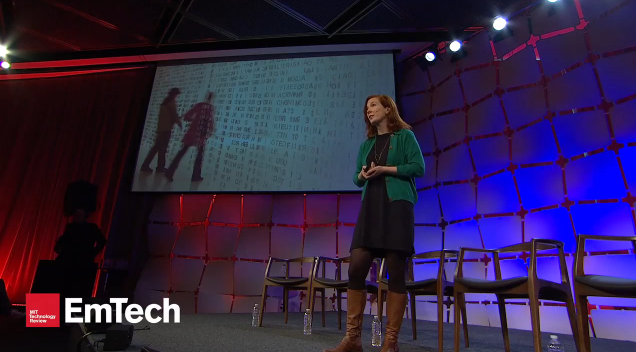
This story, "Credit Approved," is about your online data being used by lenders to approve or deny your loan application, as postulated by Kate Crawford (a principal at Microsoft research) at MIT's EmTech conference. This story is not a prediction, and I do not know of any specific plans to use online data in this way, but Fair Isaac has been offering scores using "Alternative Data Sources" and also offers "Big Data solutions" on its website today.

Credit Approved


The caller ID said it was the Credit Union, so I answered it right away.

“Hi, Rick,” said the familiar voice of Nial, the loan officer. We expected him to call.

The appraisal already came in $5,000 over the purchase price. The rest was supposed to be a formality.

“I’m afraid there’s a problem. Remember how your credit scores were good, but not great?”

I felt my heart turn to lead and sink into a sour ball in the pit of my stomach. “But you Pre-Approved us.”

“It’s these new loan requirements from Freddie Mac. When your scores are in a certain range, we have to get a supplemental score. It is listed on your credit-approval letter.”

I almost pulled up the letter, but Nial went on.

“Your FIDPO came in too low. It rates your digital profile.” Nial read the denial reasons that came with that score.

“That can’t be right! What can I do about this?”

“You can submit proof they are false, and it’ll take 60 days. Maybe it will raise the score enough, but you’d lose the house by then.”

Pat was going to freak! We’d finally found the perfect house, after a two-year search.

“I know you have more in savings, so I had them run the numbers with larger down payments. Still, the only option is a portfolio loan. The Credit Union would be the lender, but you’d need to double your down payment. We can’t go over 80% Loan To Value. But at least you wouldn’t have to pay for Mortgage Insurance.”

“We needed that money for furniture and stuff.” But it was the best Niall could do.

Pat would just have to understand. We loved the house, and at least we could salvage the deal this way.
UA-1916217-16