Neal Stephenson, thought provoking as always, speaks at the Association for Science and Technology Centers. Here are my main takeaways:
Why has science fiction shifted from optimistic, idealistic stories from 50 years ago, to dark, dystopian stories that dominate the genre today? The shift seems to have occurred in the late 70's with Star Wars (still idealistic, but a gritty and broken-down futuristic world) and Alien (an industrialized, militaristic world). But I think this reflects the cultural change of the 60's. In the 50's there was a stronger emphasis on ideal norms. The cultural revolution of the 60's exposed a lot of the pretense.
The pretense didn't go away, but a layer of pretense was lifted away, and contemporary society is a little more honest about the real norms. In fact, we've become quite jaded, especially when you look at politics. Part of this might also be blamed on Watergate and cameras bringing the horrors of the Vietnam war into the public awareness.
But, Stephenson points out, the "built" environment has only changed superficially since the 70's, compared to the changes between 1900 & 1970's.
The helpfulness of SF to engineering comes from the shared understanding that the engineering team has through the SF that they all have read. This saves time and resources in communicating the vision, because the SF writer has already shared the vision, or some portion of it, some version of it, and the engineers are all on the same page.
The Hieroglyph anthology was designed to use near-future technology to write about tech that might be attainable within the lifetime of an engineering student today.
Why isn't society taking on big projects in the physical world like we used to? Stephenson believes the financial world is what is holding us back, and a modern aversion to risk and trying new things, and our leaders.
I'm not sure I buy this aversion to risk theory. American society, in particular, has become much more dependent, and accepting of, debt as a way of life. There is a vocal movement opposing public debt, but the common use of debt is far greater today than it was prior to the late 70's (when American Express and others started offering charge cards and credit cards).
I think the lack of big engineering projects has more to do with the partisanship of contemporary politics. Stephenson does say he thinks that it has to do with leadership today, and perhaps this is what he's referring to. Taking a political stance on a major engineering project can be politically risky, and the finances of the project can be used to illustrate that risk. However, George W. Bush tried to push for a mission to Mars, with a Moon Station as an interim step. However, this didn't really catch on. Again, this may boil down to partisanship, and also to Americans' suspicion of government, which grew out of the 60's cultural changes, the Vietnam War, and Watergate.
Showing posts with label finance. Show all posts
Showing posts with label finance. Show all posts
Friday, November 29, 2013

Monday, October 14, 2013
Credit Approved (Flash Fiction)
When I worked for Arrowhead Credit Union, we used a supplemental credit score in addition to the FICO Score as part of our loan underwriting (approval/denial) process for consumer loans. One of my projects was to provide data to Fair Isaac (a.k.a., FICO) so they could create a new custom score based on our own data.

This story, "Credit Approved," is about your online data being used by lenders to approve or deny your loan application, as postulated by Kate Crawford (a principal at Microsoft research) at MIT's EmTech conference. This story is not a prediction, and I do not know of any specific plans to use online data in this way, but Fair Isaac has been offering scores using "Alternative Data Sources" and also offers "Big Data solutions" on its website today.
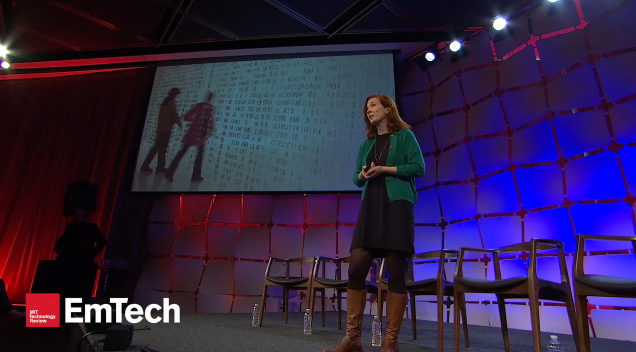
This story, "Credit Approved," is about your online data being used by lenders to approve or deny your loan application, as postulated by Kate Crawford (a principal at Microsoft research) at MIT's EmTech conference. This story is not a prediction, and I do not know of any specific plans to use online data in this way, but Fair Isaac has been offering scores using "Alternative Data Sources" and also offers "Big Data solutions" on its website today.
Credit Approved
The caller ID said it was the Credit Union, so I answered it right away.
“Hi, Rick,” said the familiar voice of Nial, the loan officer. We expected him to call.
The appraisal already came in $5,000 over the purchase price. The rest was supposed to be a formality.
“I’m afraid there’s a problem. Remember how your credit scores were good, but not great?”
I felt my heart turn to lead and sink into a sour ball in the pit of my stomach. “But you Pre-Approved us.”
“It’s these new loan requirements from Freddie Mac. When your scores are in a certain range, we have to get a supplemental score. It is listed on your credit-approval letter.”
I almost pulled up the letter, but Nial went on.
“Your FIDPO came in too low. It rates your digital profile.” Nial read the denial reasons that came with that score.
“That can’t be right! What can I do about this?”
“You can submit proof they are false, and it’ll take 60 days. Maybe it will raise the score enough, but you’d lose the house by then.”
Pat was going to freak! We’d finally found the perfect house, after a two-year search.
“I know you have more in savings, so I had them run the numbers with larger down payments. Still, the only option is a portfolio loan. The Credit Union would be the lender, but you’d need to double your down payment. We can’t go over 80% Loan To Value. But at least you wouldn’t have to pay for Mortgage Insurance.”
“We needed that money for furniture and stuff.” But it was the best Niall could do.
Pat would just have to understand. We loved the house, and at least we could salvage the deal this way.
Subscribe to:
Posts (Atom)