Friday, November 8, 2013

Do horses shrink in the dryer?

A post-apocalyptic future caused by climate change is a popular Dystopian theme. Perhaps these future animals should be smaller, at least in areas of increased temperature. Previous periods of global temperature increases have reduced the size of horses up to 30%, according to this brief article from Science. When the global trend reversed, animal size rebounded.

Of course evolutionary pressure favoring smaller animals takes place over long periods of time. But in the short run, maybe we would see evolutionary pressure killing off a great number of larger animals.

Larger muscle mass could mean more heat production, but would the animals die of heat stroke? Or would there be a more complex mechanism. Look at what is happening to Moose, the largest deer species. Their population is declining precipitously due to two parasites and white-tailed deer, but the parasites have always been around, they're just more abundant now due to climate change.

For domesticated animals, who can benefit from modern medicine and human-controlled breeding, will these ecological factors be mitigated? If so, horses and cattle might not increase.

A picture is emerging of our microbiome (the symbiotic bacteria that live in our guts) that shows the impact of our diet on our health. We feed domestic farm animals on diets that maximize their growth, so farmers can make more money on each animal. Then farmers and veterinarians administer antibiotics to help them avoid illness and grow larger. But perhaps it's healthier for an animal to be smaller, and perhaps livestock should have a diet that maximizes animal health rather than size. We're already counteracting the environmental pressures on animal size.

Thursday, November 7, 2013

11 North American Nations?

No, this is not the premise of a new YA Dystopian novel. It's a theory about the dominant cultures in the US and North America. This article in Tufts Magazine by Colin Woodard presents a more granular look at North American cultures, from the county level instead of the state level, looking at attitudes toward violence. He comes up with 11 nations based on historic settlement patterns (I like the way he names these groups):
  • Yankeedom
  • New Netherland
  • The Midlands
  • Tidewater
  • Greater Appalachia
  • Deep South
  • El Norte
  • The Left Coast
  • The Far West
  • New France
  • First Nation


I think his simple-majority approach to grouping the counties is a bit of a problem. How different would this map look if he left counties white when there was less than an 80% dominance in the trends he is studying?

I would also like to see what happened to the map if he counted suicides along with murders. Recent articles on suicide rates between various US populations has suggested that some homicides are in fact suicidal reckless behavior. It's hard to tease out the "suicide by by homicide" behavior, but adding the suicides in with the homicides might cancel out this effect.

It's an interesting paradigm that bears further investigation. Something to think about in upcoming elections.

Tuesday, November 5, 2013

Enders Game Movie Sequel?

Ender's Game took the number one slot at the box office over the weekend, and I watched it with a bunch of 8th graders, only one of whom had read the book. It blew their minds, and they thought it was great. (Spoilers ahead.)


As an adult who has read through to about the middle of book seven in the series (at which point I became too disturbed by his in-book comments about homosexuality to continue reading), I thought the film was very good, but not great. It hit all the major plot points I was expecting and felt true to the original story.

Battle School was the core of the story, and I think that was great. The space combat was greatly truncated compared to the book, but how many space battles can you watch when the key characters are just watching a projection above their heads and remote-controlling the battle above them?

Observation on User Interfaces for Computers: Gestural control was very dramatic when Ender is zooming in and out, changing perspectives of the projected space battles, but I still feel unconvinced that a computer interface with gestures is comfortable/workable for the end user without a lot of haptic feedback. The one-handed typing interface was interesting to watch - Ender was able to hold his tablet with one hand and use some sort of sign-langauge-esque typing technique.
One reason I say it was not great is because I had to explain so much about the ending to my group of moviegoers, not just the 8th graders, but also the other adults. When the movie isn't clear to those who have not read the book, that can be a problem. But it wasn't so confusing that it ruined enjoyment of the story. It's a complex story, and some events at the end were just a little too rushed to fully take in.

Even though the movie took the top slot, some analysts have suggested that it didn't do well enough to warrant a movie sequel. However, that doesn't seem to have stopped a lot of people from speculating about it. In fact, it was one of the first things to be discussed by my group of moviegoers after the lights came up. It's probably too early to know if there will be a sequel. Overseas sales are at least as important, if not more important than US sales these days.

The three likely paths a movie sequel might take are:
  1. Speaker For the Dead - the next book in the series which shows Ender 30 years later. There's not much action, and it's a very different kind of story.
  2. Ender's Shadow - Which is Bean's story, and mostly concurrent with Ender's Game. It might be good to make this while the actors have not aged too much.
  3. Fleet School - first in a new series of YA novels by card that picks up right after Ender's Game to show what happens to the Battle School after the war.
When you look at the fact that the Ender's Game novel has been back on the Best Seller list (mass-market paperbacks) for a year, and has held the #1 slot for the past few weeks, and a handful of other weeks over the summer, it's clear that Card is profiting from the movie indirectly, despite the fact that he does not profit directly from the movie (he got a flat fee for these film rights years ago).

I don't know about the film rights for the other books. It seems likely that Card would not sell the Fleet School rights for a flat fee if he thought he could profit more from the movie sales.

However, this Q&A from 2010 indicates that Ender's Game and Ender's Shadow were almost combined as one film. This suggests to me that the rights for Shadow might be in the same category as Game. However, that's just speculation on my part. It is equally possible that Card was hoping to work in Shadow so that he could sell additional rights that would be tied to the movie's earnings. Again, just my own speculation.

That said, if a sequel is made, I'm most interested in seeing Ender's Shadow. Bean is a great character, and we didn't get to see much of him in Game, even though he's clearly an important player.


Monday, October 28, 2013

One Tablet Per Child in Redlands?

Rwanda's OLPC vs. LAUSD's iPad initiative vs. Redlands USD's Dell Laptop decision.

The One Laptop Per Child (OLPC) policy is the foundation of what Rwandan President Paul Kagame hopes will make Rwanda into a tech hub of Africa. If Rwanda can provide one laptop per child, shouldn't we be able to do that in the US? And if laptops are being replaced by tablets, shouldn't we be able to provide one tablet per child?


Redlands Unified School District board just voted to purchase Dell Laptops, deciding laptops are the best solution for this district. As a member of the Finance Committee at Sacred Heart Academy in Redlands (a private school), I'm taking a sharp look at the OLPC and OTPC (One Tablet Per Child) movements.

First, Rwanda's program is not without criticism. They are struggling to deal with issues of theft and student distraction. OLPC program officials want the devices to go home. However, to prevent theft and to deal with parent complaints that laptops are a distraction at home, some teachers lock up the laptops at school. Still, kids have been caught playing video games like "Doom" during class.

Los Angeles Unified School District entered into a contract with Apple to purchase iPads and special education software for all students and teachers this year. The rollout of this initiative has been plagued with problems.

LAUSD's Problems

Here is a list of some of the problems that have arisen to date in LAUSD:

Is Apple Enterprise-Ready?

Apple famously flopped in the business computing market with the Apple III. There has been a long-standing contempt of the business market at Apple, that started changing in recent years due to their success with iPhones and iPads. However, recent iPad sales have been declining, precipitously. Apple may have reached a point where competitors, like Microsoft & Samsung, take the market from them, just like Android took over the smartphone market that the iPhone created.

Therefore, Apple has never catered to enterprise-wide deployment of their devices and software. And it shows. The iPad security issues in the LAUSD (and even the keyboard issue, I believe) are a symptom of this problem. Schools (including colleges and universities) that have attempted to integrate Apple products into their enterprise network have experienced a number of problems. One of the most discouraging, for me, is the inability to re-issue textbooks to new students each year.

Solutions


Locking down the devices

  • Yes, we should attempt to lock down the devices. However, even more important than preventing kids from browsing the Internet and playing games, we need to do our best to keep the child's information secure. This is information that could be abused to harm a student, potentially from a predator outside the school system, a bully inside the school, or a malicious school employee.
  • Signed Agreement - have the parent (for legal reasons) & student (for psychological reasons) sign an agreement regarding the use of technology. The parent should understand that they are responsible for how their child uses a device and they should understand what they need to do to keep their child safe and productive. In corporate environments, signing an agreement about how technology can be used is common.
  • Devices can be physically locked down, stored in a cart where they can charge overnight, and kept securely in the classroom. (At least as securely as anything else in the classroom - there will be break-ins).
  • Reward the hackers, don't punish them. If a student is clever enough to hack the device, and they report the vulnerability to the district (and don't publicize the exploit), they should be rewarded. The reward should be attractive, especially as the system becomes harder to crack. We should expect a student to hack the system, to gain access to teacher or administrator passwords. The trick is how we deal with that.
(There is a good fictional example of a High School student hacking a laptop, and of student information being abused by malicious school employees, in Cory Doctorow's novel, Little Brother).

Cloud Computing

Cloud computing has security concerns. They are concerns the industry is dealing with every day, but the biggest security concern is always the person who is accessing the system. Putting responsibility on the student to use a complex password, to remember it and keep private, may not be workable. Biometric security is not advanced enough to be secure (as I discussed in an earlier post on the iPhone 5S). So, the cloud should be used carefully.

Working with web/based apps and storing class projects in a Cloud that is accessible from home could be great. However, sensitive information about that child needs to be kept secure. Essay's may reveal private information about a student. Requiring tertiary authentication might be a requirement (like a home banking system where you are presented with a picture, etc.). So, the parts of the cloud accessible from home may need to be limited compared to what's accessible from the classroom.

Look to Windows Laptops & Tablet/Laptop Hybrids (coming soon)

  • Laptops have keyboards (critical for compliance with Common Core curriculum and testing), and there are a number of good manufacturers of Windows laptops. They also have USB ports.
  • Tablet/Laptop Hybrids, like the Surface Pro 2 and Samsung Ativ tablets, either come with or integrate well with keyboards and run Windows. The Tablets sometimes run a special version of Windows 8, and TrueCrypt does not yet support any version of Windows 8, but these Tablet/Laptop Hybrids bear close watching over the next couple years.
  • Microsoft has long dominated the Enterprise Software market, and they have great tools for centrally managing all the laptops. This includes tools to quickly set up new hardware (i.e., "imaging" a new laptop to install all the software automatically), and tools to centrally install new software for existing laptops on the network, and to centrally push out software updates, such as security updates. Even a laptop that is turned off can be automatically awakened to apply such updates.

Work out the E-Book licensing issue

One of my biggest reasons for wanting tablets is to eliminate those heavy, bulky, and often outdated textbooks. I've been concerned for years about the health impact of carrying heavy textbooks. However, there needs to be a good solution to the licensing issue. If books need to be reissued to students every year, buying a whole new license for every student is just too costly.

Poverty

Technology is not a solution to biggest problems facing education today, because it doesn't directly address the problem. The problem is Poverty. This is from an NPR interview with Diane Ravitch, a former assistant secretary of education:
Where there are low test scores, where there are higher dropout rates than the national average, is where there is concentrated poverty. Now, we cannot, obviously, wipe poverty out overnight, but there are many things we can do to make school a stronger equalizer than it is today. One of those would be to have reduced class sizes in the schools that serve the children of poverty. Another would be to have universal pre-kindergarten. We should have a strong arts program in every one of these schools, because children have to have a reason to come to school other than just to be tested.
Poverty is definitely an issue in the LAUSD, as it is in the high-profile Philidephia School District. Putting technology in schools is something I believe in, but there are some very basic funding issues in schools that I think we need to deal with first, and laptops will not reduce the need for more teachers and more staff in these poverty-stricken districts. Laptops can be part of a solution, but it's not going to miraculously revolutionize public school education without spending money on a lot of other areas. This is likely also true, if not more true, in Rwanda.

Tuesday, October 15, 2013

Scientific American Restores Blog Post

Good for Scientific American for restoring DNLee's blog post. The insult she is responding to is egregious. It is more than just a personal attack - and most personal attacks are probably best ignored. This is about taking a stand against sexism and racism. Such reprehensible behavior should not be tolerated. I think it was brave of DNLee to respond publicly and applaud her for doing so.


When DNLee's blog post was taken down (within an hour of being posted), it was looking like Popular Science turning off comments on their site due to Trolls. Now that the post is back, I see this as empowering science, and a show of support for women and minorities in science.

There is a lot of science controversy lately. Ultimately, I think it is good for science to get this level of scrutiny. It gives the public the opportunity to dig into the issues facing science and make it better. We should not have blind faith in science, and we should not be asked to. We should always be critical.

On the same day as DNLee's post, NPR covered the rise of "cheating" in science (e.g., faked experiment results), and the efforts to crack down on cheating. This is another example of science policing itself, like I mentioned in a recent post about shady scientific journals.

While the Popular Science actions were disheartening - like science was losing the war against trolls - cracking down on cheating and bad science journals is very encouraging. The scientific community is cleaning house

Monday, October 14, 2013

Credit Approved (Flash Fiction)

When I worked for Arrowhead Credit Union, we used a supplemental credit score in addition to the FICO Score as part of our loan underwriting (approval/denial) process for consumer loans. One of my projects was to provide data to Fair Isaac (a.k.a., FICO) so they could create a new custom score based on our own data. 


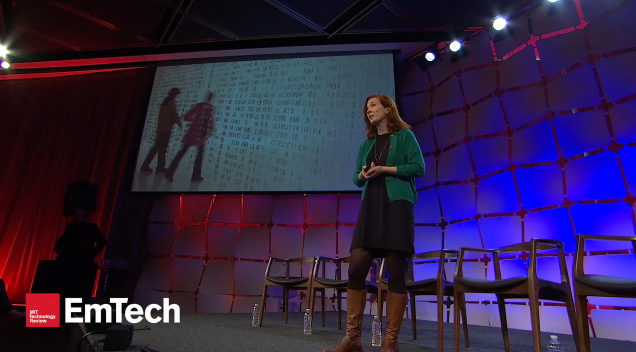
This story, "Credit Approved," is about your online data being used by lenders to approve or deny your loan application, as postulated by Kate Crawford (a principal at Microsoft research) at MIT's EmTech conference. This story is not a prediction, and I do not know of any specific plans to use online data in this way, but Fair Isaac has been offering scores using "Alternative Data Sources" and also offers "Big Data solutions" on its website today.

Credit Approved


The caller ID said it was the Credit Union, so I answered it right away.

“Hi, Rick,” said the familiar voice of Nial, the loan officer. We expected him to call.

The appraisal already came in $5,000 over the purchase price. The rest was supposed to be a formality.

“I’m afraid there’s a problem. Remember how your credit scores were good, but not great?”

I felt my heart turn to lead and sink into a sour ball in the pit of my stomach. “But you Pre-Approved us.”

“It’s these new loan requirements from Freddie Mac. When your scores are in a certain range, we have to get a supplemental score. It is listed on your credit-approval letter.”

I almost pulled up the letter, but Nial went on.

“Your FIDPO came in too low. It rates your digital profile.” Nial read the denial reasons that came with that score.

“That can’t be right! What can I do about this?”

“You can submit proof they are false, and it’ll take 60 days. Maybe it will raise the score enough, but you’d lose the house by then.”

Pat was going to freak! We’d finally found the perfect house, after a two-year search.

“I know you have more in savings, so I had them run the numbers with larger down payments. Still, the only option is a portfolio loan. The Credit Union would be the lender, but you’d need to double your down payment. We can’t go over 80% Loan To Value. But at least you wouldn’t have to pay for Mortgage Insurance.”

“We needed that money for furniture and stuff.” But it was the best Niall could do.

Pat would just have to understand. We loved the house, and at least we could salvage the deal this way.

Tuesday, October 8, 2013

Amazon, Home Banking Not Secure Anymore?

Great episode of Science Friday on Encryption last week (with Phil Zimmermann, creator of PGP).  Main takeaway: NSA is weakening security for everyone, making it riskier to do online banking and shop online, and even creating security and legal risks for American businesses. 


Many people don't realize that they use encryption every day. Those who think "I've got nothing to hide" actually do want to hide their bank account numbers, usernames, and passwords, and medical records. Encryption has become so easy to use that it's virtually transparent (just lock for the "lock" symbal, and make sure the web address says "https"). The very technology that makes online banking and shopping secure is the encryption that the NSA and other government agencies have been working to weaken or find ways to just bypass. 

We hear about private data being breached all the time. Last week it was Adobe, the maker of Photoshop, Acrobat, and Flash (still common on web pages, despite Apple's past claim that it was irrelevant). The passwords and credit card numbers that were stolen from Apple were encrypted, but when the NSA works to weaken encryption, they threaten US businesses. Federal Laws mandate that businesses protect information, like your credit card numbers, medical records, etc. Weakening that encryption exposes businesses to the risks of being compromised and possibly of being out of compliance.

This week, NPR is doing a series called Your Digital Trail. I'll be following this series closely and listening for mention of "Meshnet" or "Darknet". Both are alternatives to the Internet, that may still use the Internet, but might allow for better privacy. I recently heard someone on NPR mention "Meshnet" in response to the NSA compromising encryption certificates, but it was just mentioned fleetingly and not fully explained. I also cannot find any story on the NPR web site that mentions Meshnet or Darknet.

A darknet features prominently in Cory Doctorow's Homeland (the sequel to Little Brother, which also essentially has a darknet called "XNet"). A darknet also appears in Charles Stross's Rule 34, but it was used as a black market.

However, it remains to be seen that a meshnet/darknet solution can be made as easy for end users as the kind of encryption the average person uses today.

Update - Other stories in the Your Digital Trail Series:
UA-1916217-16