General Availability (GA) - In traditional software life-cycle, this is the version of a software application that is released after beta testing is all done and the product goes live. I like to call it General Assailability. Now everyone can try out your product and criticize it.
Obamacare launched on October 1, and it was plagued with technical glitches. Should we have expected anything less? Health Insurance is extremely complex, there are multiple providers, a challenging deadline, and there are a huge number of captive end-users (they will be required by law to either purchase insurance or pay a fine). Technical problems were inevitable because the web sites are new. I would be more surprised if there were not glitches. But it definitely creates an opportunity to enemies of Obamacare to criticize it.
Is Obamacare just a victim of its own success? Those who actually learn about Obamacare find many reasons to like it, and once it is fully implemented, it may become too popular to fight. In fact, if it were brought to a vote in the House today, it might pass.
So, now is the time to fight it. Once the bugs are worked out and people see the benefits, it will be too late.
A synthesis of Flash Fiction, opinions & ideas on technology & society, Science Fiction & Fantasy.
Wednesday, October 2, 2013
Monday, September 30, 2013
The New Glossophobia - Texting vs. Speaking Face-To-Face
Is there a risk of losing oral communication skills? I find it more difficult to communicate orally sometimes. A conversation can get off track and I might forget some of the points I had hoped to make. Laying it out in a letter, I can make sure I get my points across.
Walter Woodman may have some good points to think about in his movie, Noah. However, I still think he is likely missing something based on this quote:
Using text can be an "easy" way to say difficult things without having to deal with someone's response. Sure, people will continue to break up by text message. Like a "Dear John" letter, you don't have to deal with the repercussions of that message, which could be ugly. You can then block the number...
But this strategy backfires when you will have an ongoing relationship with a person. In which case, you need to actually deal with someone's emotional response. You can't take the easy way out, because you can't get out.
When you will need to deal with an emotional response, this is more effectively done in person. Sensitive subjects require the ability to have a discourse, to read body language and other non-verbal communication. Emails and text messages can be misunderstood, and I have learned from experience to avoid email for certain kinds of messages.
Etiquette, and the complexity of human interaction may perpetuate a practice of in-person communication for some types of messages. It's hard to match the in-person approach for bonding and trust-building. Also, for delicate messages, like terminating employment (e.g., Up In The Air), in-person interaction may remain the best strategy.
If we lose the skill of face-to-face communication, we'll end up pissing a lot of people off, making enemies at work. We could lose a lot of friends and productivity because of it.
But there are also more tools for face-to-face communication. These video chat applications are very popular, too. I believe these will become more convenient to use (more cameras on monitors, etc). They may become a substitute for in-person communication, but I don't think face-to-face communication will go away.
We all have to go through a learning curve as we enter the workforce, but I don't think that we'll lose the skills of face-to-face communication. Those who are effective at work, and those who wish to be, will learn these skills, even if they do become a bit more rare, especially for new generations of workers fresh out of school.
Walter Woodman may have some good points to think about in his movie, Noah. However, I still think he is likely missing something based on this quote:
"If you want a man to be honest, then give him a mask, turn the lights off, let nobody know who he is, and he doesn't have to worry about what you think about him... People are going to start to value honest connections more and more."Catfish is a great example of masks not resulting in honesty. (There is even a Catfish TV show).
Using text can be an "easy" way to say difficult things without having to deal with someone's response. Sure, people will continue to break up by text message. Like a "Dear John" letter, you don't have to deal with the repercussions of that message, which could be ugly. You can then block the number...
But this strategy backfires when you will have an ongoing relationship with a person. In which case, you need to actually deal with someone's emotional response. You can't take the easy way out, because you can't get out.
When you will need to deal with an emotional response, this is more effectively done in person. Sensitive subjects require the ability to have a discourse, to read body language and other non-verbal communication. Emails and text messages can be misunderstood, and I have learned from experience to avoid email for certain kinds of messages.
Etiquette, and the complexity of human interaction may perpetuate a practice of in-person communication for some types of messages. It's hard to match the in-person approach for bonding and trust-building. Also, for delicate messages, like terminating employment (e.g., Up In The Air), in-person interaction may remain the best strategy.
If we lose the skill of face-to-face communication, we'll end up pissing a lot of people off, making enemies at work. We could lose a lot of friends and productivity because of it.
But there are also more tools for face-to-face communication. These video chat applications are very popular, too. I believe these will become more convenient to use (more cameras on monitors, etc). They may become a substitute for in-person communication, but I don't think face-to-face communication will go away.
We all have to go through a learning curve as we enter the workforce, but I don't think that we'll lose the skills of face-to-face communication. Those who are effective at work, and those who wish to be, will learn these skills, even if they do become a bit more rare, especially for new generations of workers fresh out of school.
Monday, September 23, 2013
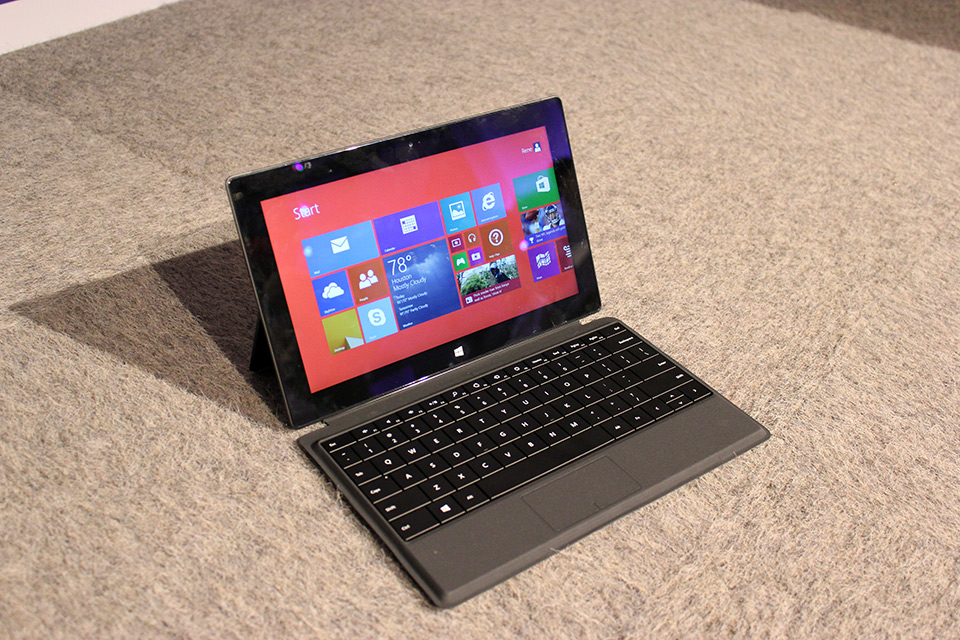
Surface Pro 2 Unveiled
I'm just about ready to take the leap on a laptop replacement - but the Surface Pro 2 is not available quite yet. Snap a keyboard on, grab my lap desk, and I'll be ready to go.
This is one of the products I mentioned to Information Week last month.
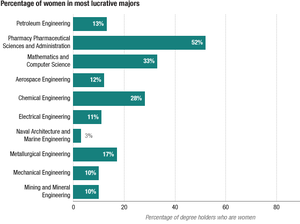
If more women apply to STEM fields, will they get in?
More women are applying to competitive programs (i.e., lower acceptance rates) in college that result in low-paying jobs (English, Psychology). The Simpson Paradox (a statistical principal where an erroneous conclusion is made by aggregating the data too simply, and the true and contradictory conclusion is revealed by properly sub-grouping the aggregate data) has been invoked to indicate UC Berkely is not discriminating against women applicants. If this trend can be reversed, will the gap actually disappear between the overall acceptance rate of men vs. women?
Sunday, September 22, 2013
iPhone 5S TouchID - Easy to Crack
Maybe using fingerprint access wasn't such a good idea for a touchscreen device... or for any device.
Fingerprint authentication is more convenient for users than passwords, and it held promise for making security easier for end-users. However, as discussed in a recent Fingerprint authentication can bypass an individual's Fifth Amendment rights.
Organizations might still have found fingerprint authentication to be a good choice, since many corporations will not hesitate to access employee's files and emails whey they feel it is warranted. However, that appears to be a non-starter as well since iPhone 5S's TouchID has already been cracked with easy to obtain materials:
Fingerprint resistant materials might be a way to counter this flaw, and this might be one applicaiton of Research into omniphobic materials. However, fingerprints have been a great tool for law enforcement because it is so hard to prevent leaving them everywhere. Can we really control our fingerprints sufficiently?
Maybe biometric security developers need to look for a biometric feature that the human body keeps as secure as the information we want to store electronically.
Update: More security woes for IOS, a backdoor to the lock screen via Siri. Disabling Siri on the lock screen is the recommended solution.
Fingerprint authentication is more convenient for users than passwords, and it held promise for making security easier for end-users. However, as discussed in a recent Fingerprint authentication can bypass an individual's Fifth Amendment rights.
Organizations might still have found fingerprint authentication to be a good choice, since many corporations will not hesitate to access employee's files and emails whey they feel it is warranted. However, that appears to be a non-starter as well since iPhone 5S's TouchID has already been cracked with easy to obtain materials:
Fingerprint resistant materials might be a way to counter this flaw, and this might be one applicaiton of Research into omniphobic materials. However, fingerprints have been a great tool for law enforcement because it is so hard to prevent leaving them everywhere. Can we really control our fingerprints sufficiently?
Maybe biometric security developers need to look for a biometric feature that the human body keeps as secure as the information we want to store electronically.
Update: More security woes for IOS, a backdoor to the lock screen via Siri. Disabling Siri on the lock screen is the recommended solution.
Tuesday, August 20, 2013
Cool Tech for Back-To-School
I was quoted in Information Week article on tech tools for college students going back to school. Items 4 (Tablet/Laptop Hybrids) and 5 (LinkedIn University Pages) are where I was quoted. I also suggested item 6 (Portable Power - rechargeable batteries with adapters to recharge your portable devices).
Monday, August 19, 2013
LinkedIn University Pages
I was quoted in an article in Information Week that announced LinkedIn has recently launched University Pages, a new service for higher education institutions. (I was involved in the University Pages beta test, and I put on a small conference at UCR with several speakers discussing LinkedIn, including John Hill, LinkedIn's Higher Education Evangelist). This is the first time LinkedIn has really pursued specialized services for a vertical market. LinkedIn also opens up their service to high school students on September 12, and they've been trying to attract more college students for a long time
This focus on Higher Ed is interesting, particularly as I read more and more articles on LinkedIn saying that a college degree is unnecessary, and lots of news articles reporting that college degrees are not cost-effective. The Obama Administration is also coming up with standard ratings to compare colleges based on outcomes, including the employment of alumni.
This could place LinkedIn in a great position. They already have a database that includes employment information and college degrees. If the government requires schools to provide employment statistics, LinkedIn will be in a position to broker that information. If alumni can be given a sufficient incentive to allow LinkedIn to share the information with schools, LinkedIn will be an essential institution, imbedded in the fabric of our society.
What would be an adequate incentive? Is it enough to help your alma mater comply with a federal mandate to track employment information of alumni? How about a certification of your degree (maybe even your GPA, if you wish to show it off) on LinkedIn - as good as a transcript to prospective employers?
Schools would love to get access to current contact and employment information for a variety of purposes. Alumni are a valuable resource, whether they volunteer or attend events (especially athletics) on campus. They're also a great source of donations, although the trend has been for alumni to give less and less over the years.
It should be noted that the number of contactable alumni and the number of alumni donors are factors that affect a college's US News ranking. With high school students on LinkedIn, and all this valuable data on colleges and their alumni (some of which might not even be available to the colleges), will LinkedIn develop their own ranking system?
There may be a number of legal and practical obstacles (like getting a majority of colleges to participate with LinkedIn), but there are some exciting incentives here, and LinkedIn is clearly pursuing strategic ways to leverage their data and provide value to its members.
This focus on Higher Ed is interesting, particularly as I read more and more articles on LinkedIn saying that a college degree is unnecessary, and lots of news articles reporting that college degrees are not cost-effective. The Obama Administration is also coming up with standard ratings to compare colleges based on outcomes, including the employment of alumni.
This could place LinkedIn in a great position. They already have a database that includes employment information and college degrees. If the government requires schools to provide employment statistics, LinkedIn will be in a position to broker that information. If alumni can be given a sufficient incentive to allow LinkedIn to share the information with schools, LinkedIn will be an essential institution, imbedded in the fabric of our society.
What would be an adequate incentive? Is it enough to help your alma mater comply with a federal mandate to track employment information of alumni? How about a certification of your degree (maybe even your GPA, if you wish to show it off) on LinkedIn - as good as a transcript to prospective employers?
Schools would love to get access to current contact and employment information for a variety of purposes. Alumni are a valuable resource, whether they volunteer or attend events (especially athletics) on campus. They're also a great source of donations, although the trend has been for alumni to give less and less over the years.
It should be noted that the number of contactable alumni and the number of alumni donors are factors that affect a college's US News ranking. With high school students on LinkedIn, and all this valuable data on colleges and their alumni (some of which might not even be available to the colleges), will LinkedIn develop their own ranking system?
There may be a number of legal and practical obstacles (like getting a majority of colleges to participate with LinkedIn), but there are some exciting incentives here, and LinkedIn is clearly pursuing strategic ways to leverage their data and provide value to its members.
Subscribe to:
Posts (Atom)